

DOI: 10.5281/zenodo.22131033 · UDC: 616-022.7-053.2:614.2(478)
Introduction. Healthcare-associated infections (HAIs) represent a major public health problem in pediatrics, particularly among newborns and children requiring intensive or invasive care. Objectives. To evaluate the incidence, distribution, and microbiological profile of HAIs among children hospitalized in a tertiary-level pediatric healthcare institution in the Republic of Moldova.
Materials and methods. A retrospective descriptive study analyzed the medical records of children hospitalized between November 1, 2023, and May 5, 2024, in a tertiary-level pediatric healthcare institution in the Republic of Moldova. Of 1,163 records assessed, 96 were excluded due to incomplete medical records or missing relevant clinical information, hospitalization duration of less than 48 hours, illegible or insufficiently documented medical records, or the presence of an infection at the time of admission, resulting in a final sample of 1,067 pediatric patients. HAI case definitions followed Ministry of Health Order No. 533/2023. Data were analyzed in Microsoft Excel by calculating absolute and relative frequencies and incidence rates.
Results. A total of 67 patients (6.28%) developed at least one HAI, accounting for 77 HAI episodes in total. Accordingly, the episode-based incidence was 7.21 per 100 admissions, with the highest rates in the premature infants unit (25.37%, 34/134), neonatal pathology (19.04%, 16/84), and neonatal surgery (8.4%, 18/214). Newborns accounted for approximately 65% of all HAI episodes. Respiratory tract infections were the most frequent clinical form (54.6%), followed by bloodstream infections (19.5%). Gram-negative bacteria predominated (62% of isolates), particularly Klebsiella pneumoniae (24%) and Pseudomonas aeruginosa (11%); Gram-positive bacteria accounted for 31%, led by Staphylococcus epidermidis (14%).
Conclusions. Within the institution studied, HAIs remain an important pediatric problem, characterized by uneven distribution across departments and predominant involvement of newborns and premature infants; findings are limited to this institution and are not nationally representative.
Healthcare-associated infections represent a major global public health problem, being associated with a significant increase in morbidity, mortality, and healthcare system costs. According to data provided by the European Centre for Disease Prevention and Control, the prevalence of HAIs in European hospitals is estimated at 5–7% [1, 2], with considerably higher values reported in intensive care units, where incidence ranges from 5% to 25%, depending on the level of implementation of preventive measures [3].
Pediatric patients, especially newborns and children hospitalized in neonatal and pediatric intensive care units, are at increased risk of developing HAIs [4]. This vulnerability is determined by the immaturity of the immune system, the high frequency of invasive procedures, and the use of medical devices such as central venous catheters and mechanical ventilation [5–7]. Recent studies highlight that ventilator-associated pneumonia (VAP) and catheter-associated bloodstream infections (CLABSIs) remain among the most frequent types of HAIs in these units, contributing significantly to unfavorable patient outcomes [8, 9].
From an etiological perspective, HAIs in pediatric patients are predominantly caused by opportunistic microorganisms, including Gram-negative and Gram-positive bacteria, among which Klebsiella pneumoniae, Escherichia coli, Pseudomonas aeruginosa, and Staphylococcus aureus are the most notable [6, 10]. In recent years, the alarming increase in antimicrobial resistance among these pathogens has become a major challenge, complicating treatment and being associated with a higher rate of therapeutic failure and complications [11, 12].
In the Republic of Moldova (RM), the issue of HAIs is becoming increasingly relevant; however, it remains insufficiently investigated compared to other European countries. Available data indicate that these infections represent a significant challenge for the healthcare system, being influenced by organizational particularities and the capacity for epidemiological surveillance [13]. At the same time, the number of reported cases has increased in recent years, including in the context of strengthened monitoring and reporting mechanisms [13]. Nevertheless, local literature highlights the fragmented nature of available data and the difficulty of accurately estimating the true incidence of HAIs, particularly among pediatric patients [4].
Aim. The aim of the study was to evaluate the incidence, distribution, and microbiological profile of healthcare-associated infections among children hospitalized in a pediatric institution in the Republic of Moldova, by hospital department and age group, and to compare these findings with data reported in the international literature.
This retrospective descriptive study analyzed the medical records of children hospitalized between November 1, 2023, and May 5, 2024, in a tertiary-level pediatric healthcare institution in the Republic of Moldova. Inclusion criteria were: age 0–17 years, admission during the study period, and a hospital stay of at least 48 hours (the minimum interval after which an infection is classified as healthcare-associated rather than community-acquired, per Ministry of Health Order No. 533/2023). Of 1,163 records initially assessed, 96 were excluded for incomplete, illegible, or insufficiently documented medical records; hospitalization shorter than 48 hours; or a confirmed infection already present at admission, resulting in a final sample of 1,067 pediatric patients.
For each patient, demographic data (age, sex, gestational age for newborns) and epidemiological data (occurrence and number of HAI episodes) were collected, together with microbiological data (isolated pathogen, where available). Case definitions for infection classification followed Ministry of Health Order No. 533/2023, ensuring standardized diagnostic criteria and comparability with national and international data [14].
Each distinct HAI episode (classified by infection site) was counted separately for a given patient, so that a patient could contribute more than one episode during the study period. Accordingly, two incidence measures were calculated: an episode-based incidence (total number of HAI episodes per 100 admissions) and a patient-based incidence (proportion of patients with at least one HAI episode per 100 admissions).
Statistical analysis was performed in Microsoft Excel, calculating absolute and relative frequencies, percentages, and incidence rates; results were presented as tables and graphs illustrating the distribution of infections by age group, sex, gestational age, and hospital department, as well as the frequency of identified etiological agents.
| Medical Profile | Total | Excluded | Included | HAI episodes among included patients | ||||
|---|---|---|---|---|---|---|---|---|
| Abs | % | abs. | % | abs. | % | abs. | % | |
| Allergology | 88 | 7,6 | 14 | 15,9 | 74 | 84,1 | 0 | 0 |
| Septic Surgery | 88 | 7,6 | 13 | 14,8 | 75 | 85,2 | 2 | 2,6 |
| Neonatal Surgery | 214 | 18,4 | 0 | 0 | 214 | 100 | 18 | 8,4 |
| Urology | 93 | 8 | 11 | 11,8 | 82 | 88,2 | 1 | 1,2 |
| General Surgery | 177 | 15,2 | 3 | 1,7 | 174 | 98,3 | 2 | 1,15 |
| Premature Infants Unit | 135 | 11,6 | 1 | 0.7 | 134 | 99,3 | 34 | 25,37 |
| Gastroenterology and hepatology | 90 | 7,7 | 35 | 38,9 | 55 | 61,1 | 0 | 0 |
| Neonatal Pathology | 84 | 7,2 | 0 | 0 | 84 | 100 | 16 | 19,04 |
| Nephrology | 76 | 6,5 | 12 | 15,8 | 64 | 84,2 | 3 | 4,68 |
| Orthopedics, Traumatology and Vertebrology | 118 | 10,2 | 7 | 5,9 | 111 | 94,1 | 1 | 0,90 |
| Total | 1163 | 100 | 96 | 8,3 | 1067 | 91,7 | 77 | 7,21 |
The analysis of HAIs data revealed an overall incidence of 7.21 episodes per 100 admissions, corresponding to 77 HAI episodes recorded among 67 of the 1,067 included patients (patient-based incidence: 6.28%). 59 patients had one HAI episode, 6 patients had two episodes of different types, and 2 patients had three episodes of different types, highlighting that these infections represent a significant health problem in the pediatric hospital environment of the institution studied. However, the uneven distribution of cases across hospital departments indicates a particular vulnerability among certain patient categories. Thus, the highest incidence rates were recorded in departments providing care for very young children: the premature infant unit (25. 37 cases per 100 admissions), followed by the neonatal pathology unit (19. 04) and neonatal surgery (8. 4) (Table 1).
HAI episodes were predominantly recorded among newborns, who accounted for approximately 65% of all episodes (Figure 1). However, because age-specific denominators for all hospitalized children were not analyzed, these proportions should not be interpreted as age-specific incidence rates or risk estimates. The presence of HAI episodes across all age groups nevertheless indicates that prevention and control measures remain relevant throughout pediatric care.
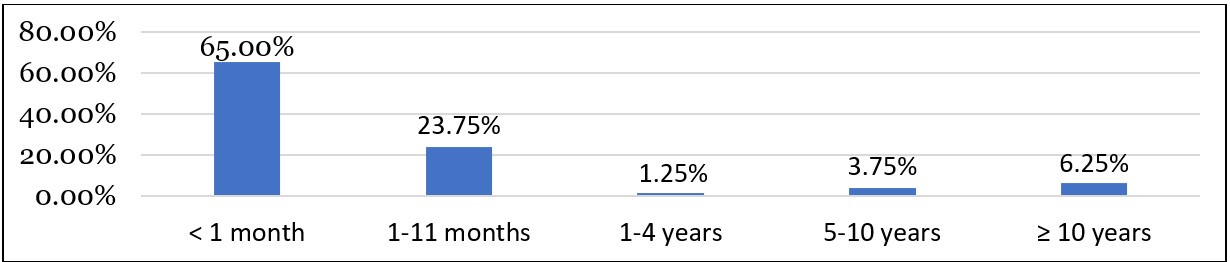 Figure 1. Distribution of HAI episodes by age group among children hospitalized in the tertiary-level pediatric healthcare institution studied
The distribution of HAI episodes according to gestational age showed that the largest proportion of episodes among newborns occurred in those born before 32 weeks of gestation. Because the total number of hospitalized newborns in each gestational-age category was not analyzed, these proportions describe the distribution of HAI episodes and should not be interpreted as gestational-age-specific incidence rates or risk estimates.
Thus, of the 50 HAI episodes identified among newborns in our study, 27 (54%) occurred in newborns with a gestational age below 32 weeks, 13 (26%) in those with a gestational age of 32–37 weeks, and 10 (20%) in those born at more than 37 weeks of gestation (Figure 2). The predominance of HAI episodes among newborns, particularly those born before 32 weeks of gestation, highlights the substantial burden of healthcare-associated infections in this vulnerable population.
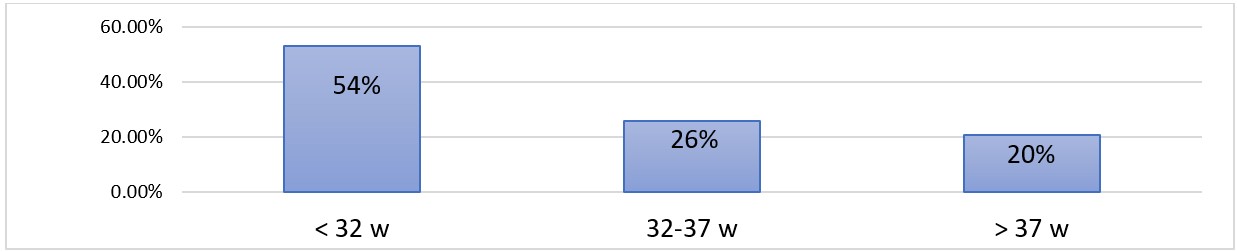 Figure 2. Proportion of HAI episodes among newborns according to gestational age in the tertiary-level pediatric healthcare institution studied
The analysis of HAI types among pediatric patients hospitalized in the institution studied showed differences in the distribution of clinical forms across age categories. Respiratory tract infections predominated, accounting for approximately 54.6% of all HAI episodes, with a larger share of these episodes recorded among newborns and children under 5 years of age.
Bloodstream infections ranked second in the structure of pediatric HAIs, representing 19.5% of all episodes. Their proportional distribution was greater during the first year of life, accounting for 24% of episodes among newborns and 17.6% among children aged 1–11 months.
Urinary tract infections and surgical site infections had a lower overall frequency, with a greater proportional representation in some older age groups (Figure 3).
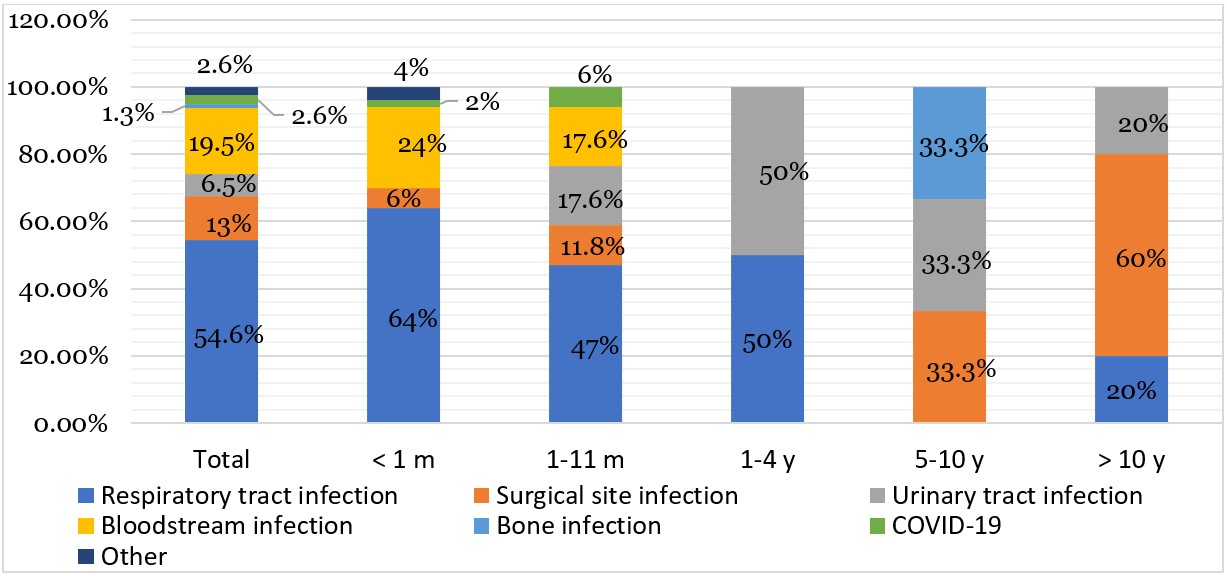 Figure 3.
Distribution of clinical forms of HAIs in children by age groups in a
tertiary-level pediatric healthcare institution in the Republic of
Moldova
Figure 3.
Distribution of clinical forms of HAIs in children by age groups in a
tertiary-level pediatric healthcare institution in the Republic of
MoldovaThe identified microorganisms were predominantly bacterial, with a significant proportion of Gram-negative bacteria (62%), highlighting their major role in the infectious pathology analyzed. Among these, Klebsiella pneumoniae was the dominant etiological agent (24%), followed by non-fermenting Gram-negative bacilli (NFGNB) (15%) and Pseudomonas aeruginosa (11%).
Gram-positive microorganisms accounted for 31% of all isolates, with a predominance of Staphylococcus epidermidis (14%), followed by Staphylococcus aureus (7%), Enterococcus faecalis (5%), and Streptococcus viridans (5%).
Regarding other etiological agents, fungi had a limited contribution (3%), being mainly represented by species such as Candida glabrata, while viruses accounted for 4% of the total, including cases associated with SARS-CoV-2.
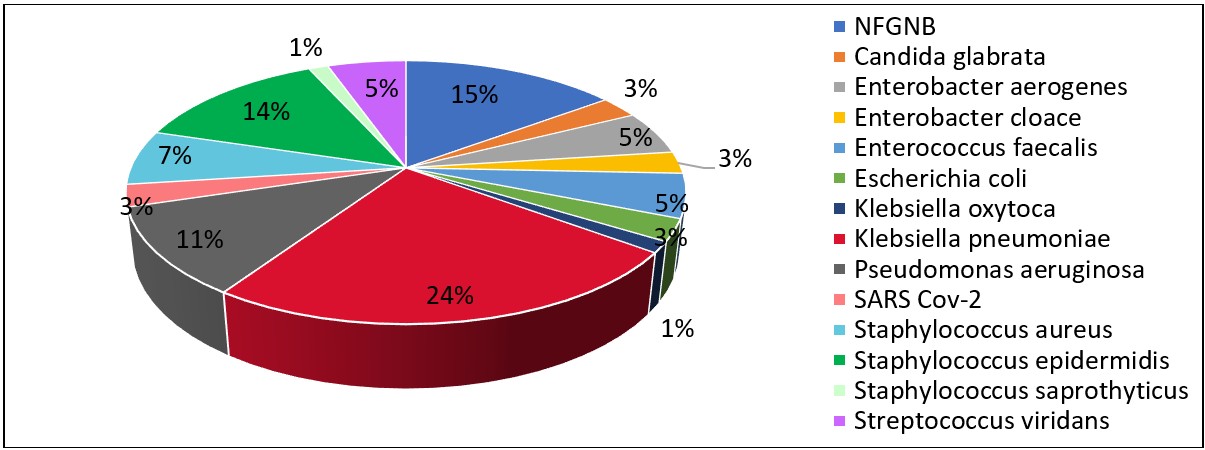 Figure 4.
Microorganisms isolated from children with HAIs in a tertiary-level
pediatric healthcare institution in the Republic of Moldova
Figure 4.
Microorganisms isolated from children with HAIs in a tertiary-level
pediatric healthcare institution in the Republic of MoldovaThe results of the study confirm that healthcare-associated infections represent an important problem in pediatrics, even in the context of an apparently moderate patient-based HAI incidence of 6.28%. This value falls within the 5–25% range described for pediatric and neonatal units in the international literature, which varies depending on the type of healthcare services and the level of implementation of preventive measures [3]. HAI episodes were predominantly recorded among newborns (approximately 65% of all episodes), a population recognized in the literature as particularly vulnerable because of immune immaturity and the frequent need for intensive therapeutic support [15, 16]. Mechanical ventilation, parenteral nutrition, and central venous catheters are established risk factors for HAIs in neonatal populations [17]. However, because the present study did not calculate age- or gestational-age-specific incidence rates, the observed distribution should not be interpreted as a direct estimate of relative risk between age groups.
The concentration of HAI episodes in units caring for premature infants may be related to the greater clinical vulnerability of these patients and their frequent need for invasive medical support, factors recognized in the literature as important determinants of HAI risk. Ventilator-associated pneumonia and bloodstream infections are major components of the HAI profile in both developed and resource-limited settings [19].
Regarding the clinical structure of HAIs, the predominance of respiratory tract infections (54. 6%) observed in this study represents an important finding. This partially contrasts with data from some developed countries, where catheter-associated bloodstream infections have been predominant (up to 69. 6% of HAIs in some neonatal units) [20]. Similarly, the ECDC multicenter study involving over 17, 000 pediatric patients from 29 countries reported a predominance of bacteremia (45%), followed by lower respiratory tract infections (22%) [16]. Likewise, in Italy, bloodstream infections accounted for 45. 4% of HAIs in pediatric intensive care units, being strongly associated with invasive device use [6]. However, other recent studies confirm a distribution similar to that observed in the present research: in a pediatric intensive care unit, nosocomial pneumonia accounted for 45. 2% of HAIs, exceeding bloodstream infections (14. 5%) [21]. This variability highlights the influence of local factors such as duration of mechanical ventilation, patient density, and the level of implementation of preventive measures.
From an etiological perspective, our study demonstrated a predominance of Gram-negative bacteria (62%), particularly Klebsiella pneumoniae and Pseudomonas aeruginosa, while Gram-positive bacteria such as Staphylococcus aureus (7%), Staphylococcus epidermidis (14%), and Streptococcus viridans (5%) contributed to a significantly lower proportion. This distribution partially contrasts with developed countries, where Gram-positive cocci dominate device-associated HAIs [6, 10]. Recent studies indicate that Gram-negative bacteria may account for more than 50–60% of pediatric HAI pathogens, being frequently associated with increased antimicrobial resistance and severe clinical outcomes [22]. In low- and middle-income countries, Gram-negative bacteria clearly predominate and are often associated with high antimicrobial resistance, as confirmed by studies from Southeast Asia and Sub-Saharan Africa [23]. Thus, the microbiological profile observed in the institution studied shows features reported in both developed and transitional healthcare settings. Because the study was conducted in a single institution, these findings should not be interpreted as representative of the national microbiological profile of the Republic of Moldova.
An important aspect is the reporting of 15% of isolates as non-fermenting Gram-negative bacilli without species-level identification. The lack of species differentiation limits epidemiological and clinical value, as species such as Pseudomonas aeruginosa and Acinetobacter baumannii have distinct virulence profiles and resistance patterns [24]. Multicenter European studies have reported increasing multidrug-resistant Acinetobacter baumannii strains in pediatric intensive care units, often associated with outbreaks and increased mortality [2]. Aggregated reporting as NFGNB may underestimate the importance of these critical pathogens and limits comparability with international studies, where species-level identification is standard [24]. This limitation underscores the need to strengthen microbiological diagnostic capacity to guide appropriate antimicrobial therapy and prevent HAIs, especially given that European studies indicate that up to 16–20% of infections may remain without complete etiological diagnosis, affecting the quality of epidemiological surveillance and complicating antimicrobial treatment decisions [25].
Within the pediatric institution studied, healthcare-associated infections in children are characterized by an intermediate epidemiological profile, marked by a moderate incidence, predominant involvement of newborns and premature infants, a high frequency of respiratory infections, and the predominance of Gram-negative bacteria. As the study was conducted in a single institution, these findings cannot be generalized to the national pediatric population of the Republic of Moldova; multicenter studies are needed to confirm their broader representativeness. These findings nonetheless highlight the need to strengthen epidemiological surveillance systems, improve microbiological diagnostics (including species-level identification of NFGNB), and rigorously implement infection prevention and control measures, as well as antimicrobial stewardship programs, in order to reduce the burden of HAIs and align with international standards.
European Centre for Disease Prevention and Control. Point Prevalence Survey of Healthcare-Associated Infections and Antimicrobial Use in European Acute Care Hospitals. European Centre for Disease Prevention and Control; 2024.
European Centre for Disease Prevention and Control. Healthcare-Associated Infections in Intensive Care Units: Annual Epidemiological Report. European Centre for Disease Prevention and Control; 2024.
World Health Organization. Global Report on Infection Prevention and Control 2024. World Health Organization; 2024.
Marga I, Paraschiv A. Infecțiile asociate asistenței medicale la copii. Sănătate Publică, Economie și Management în Medicină. 2024.
Rosenthal VD, et al. Six-year multicenter study on short-term peripheral venous catheters-related bloodstream infection rates in 727 intensive care units of 268 hospitals in 42 countries: INICC findings. Infect Control Hosp Epidemiol. 2020;41(5):553-563. doi:10.1017/ice.2020.20.
Folgori L, Bielicki J, et al. Antimicrobial-resistant Gram-negative infections in neonates: burden of disease and challenges in treatment. Curr Opin Infect Dis. 2017;30(3):281-288. doi:10.1097/QCO.0000000000000371.
Shane AL, Sánchez PJ, Stoll BJ. Neonatal sepsis. Lancet. 2017;390:1770-1780. doi:10.1016/S0140-6736(17)31002-4.
Deniz S, Akın Şen İ, Özdemir K, et al. Evaluation of risk factors for central venous line-associated bloodstream infections and the benefits of bundle application. Pamukkale Med J. 2023;16(4):716-725. doi:10.31362/patd.1343916.
Atıcı S, Kılıç S, Karadeniz Cerit K, et al. Healthcare-associated infections in the first four years of a pediatric surgical intensive care unit. J Infect Dev Ctries. 2025;19(4):576-581. doi:10.3855/jidc.21092.
Magill SS, O’Leary E, Janelle SJ, et al. Changes in prevalence of healthcare-associated infections in U.S. hospitals. N Engl J Med. 2018;379(18):1732-1744. doi:10.1056/NEJMoa1801550.
Naghavi M, Vollset S, et al. Global burden of bacterial antimicrobial resistance 1990–2021: a systematic analysis with forecasts to 2050. Lancet. 2024;404:1199-1226.
Murray CJL, Ikuta K, Sharara F, et al. Global burden of bacterial antimicrobial resistance in 2019: a systematic analysis. Lancet. 2022;399:629-655.
Agenția Națională pentru Sănătate Publică. Raport Anual ANSP 2024. Agenția Națională pentru Sănătate Publică; 2024. Accessed August 13, 2026. https://ansp.md/wp-content/uploads/2025/05/RAPORT-ANUAL-ANSP-2024.pdf
Ministerul Sănătății al Republicii Moldova. Ordinul nr. 533 din 14 iunie 2023 cu privire la aprobarea listei bolilor transmisibile și a problemelor de sănătate speciale conexe supuse înregistrării și notificării în cadrul sistemului de supraveghere epidemiologică, precum și a definițiilor de caz. Ministerul Sănătății al Republicii Moldova; 2023. Accessed August 13, 2026. https://ms.gov.md/wp-content/uploads/2023/07/Ordin-533-din-14.06.2023.pdf
Johnson J, Malwade S, Agarkhedkar S, et al. Risk factors for health care-associated bloodstream infections in NICUs. JAMA Netw Open. 2025;8(3):e251821. doi:10.1001/jamanetworkopen.2025.1821.
Zingg W, et al. Healthcare-associated infections in neonates and children. Lancet Infect Dis. 2017;17(4):381-389. doi:10.1016/S1473-3099(16)30517-5.
Álvarez-Moreno CA, Valderrama-Beltrán SL, Rosenthal VD, et al. Impact of a multidimensional INICC approach on central line-associated bloodstream infection rates. Am J Infect Control. 2016;44(11):e235-e241. doi:10.1016/j.ajic.2016.03.043.
Gkentzi D, Dimitriou G, Karatza A, et al. Epidemiology of healthcare-associated infections in children. Children (Basel). 2022;9(11):1669. doi:10.3390/children9111669.
Dramowski A, Bolton L, Bekker A, et al. Epidemiology of healthcare-associated bloodstream infection in South African neonatal units. BMC Infect Dis. 2024;24:1350. doi:10.1186/s12879-024-10219-0.
Scamardo MS, Dolce P, Esposito EP, et al. Trends, risk factors and outcomes of healthcare-associated infections in a NICU. Ital J Pediatr. 2020;46:34. doi:10.1186/s13052-020-0799-3.
Karaaslan A, Soysal A, Kepenekli Kadayifci E, et al. Healthcare-associated infections in pediatric intensive care units. J Pediatr Res. 2020;7(3):179-186. doi:10.4274/jpr.galenos.2019.60094.
Al Dabbagh M, Alghounaim M, Almaghrabi RH, et al. Healthcare-associated Gram-negative infections among pediatric patients. Infect Dis Ther. 2023;12(5):1217-1235. doi:10.1007/s40121-023-00799-w.
Allegranzi B, Bischoff P, de Jonge S, et al. WHO recommendations on preoperative measures for surgical site infection prevention. Lancet Infect Dis. 2016;16(12):e276-e287. doi:10.1016/S1473-3099(16)30398-X.
Tacconelli E, Carrara E, Savoldi A, et al. WHO priority list of antibiotic-resistant bacteria. Lancet Infect Dis. 2018;18(3):318-327. doi:10.1016/S1473-3099(17)30753-3.
Pang Z, Raudonis R, Glick BR, Lin TJ, Cheng Z. Antibiotic resistance in Pseudomonas aeruginosa. Biotechnol Adv. 2019;37(1):177-192. doi:10.1016/j.biotechadv.2018.11.013.